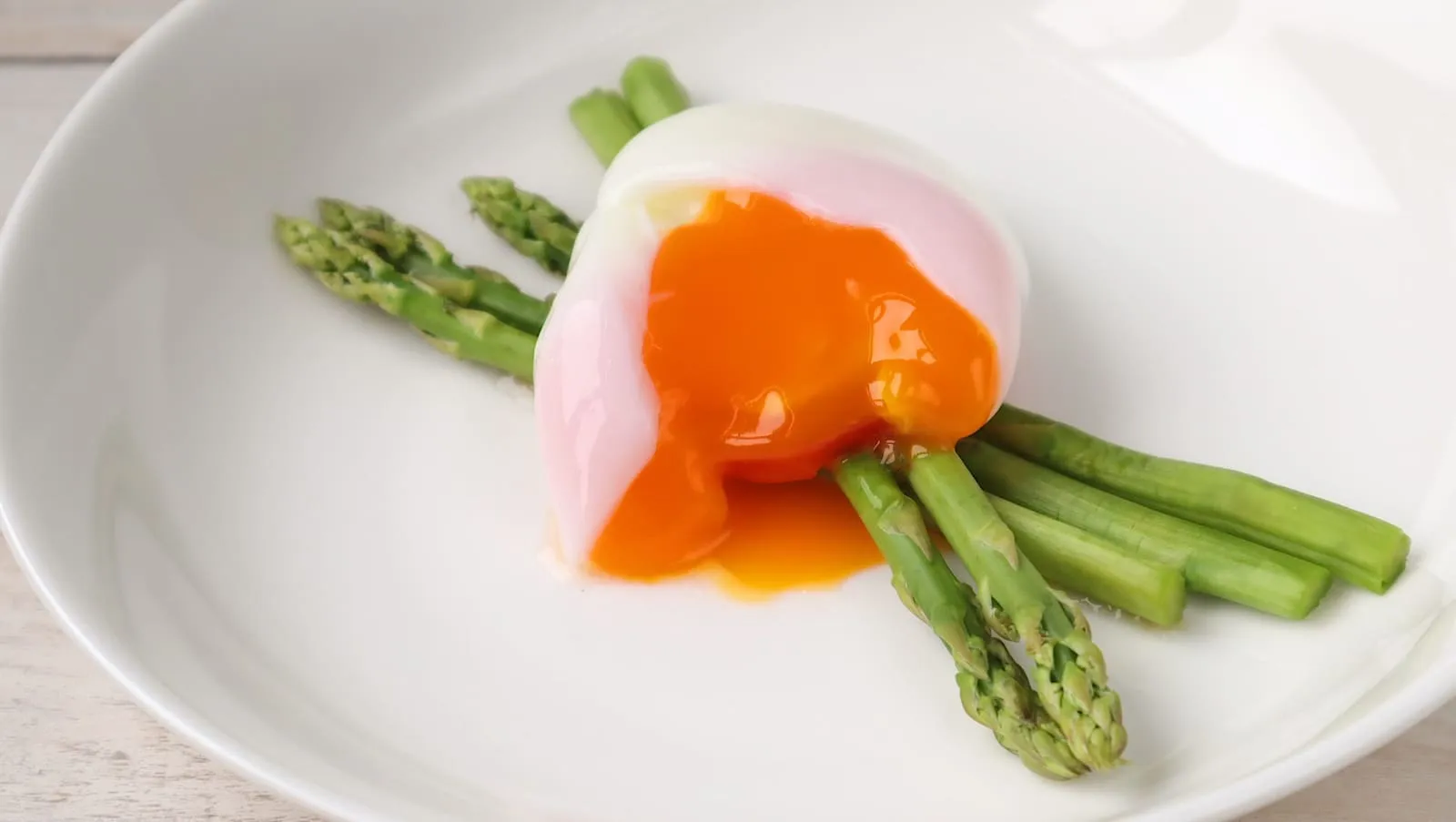
Easiest Perfect Poached Egg
Want a perfectly oval poached egg? Are you still stirring a whirlpool with a spoon? Don't bother. Just follow a few basic principles and you can easily make smooth, white, tender, round poached eggs.
By Amanda Chang
Jump to recipe ↓This page was machine-translated and may contain errors.
A perfectly oval poached egg is many people’s favorite breakfast. In this post, I share the simplest way to make a perfect poached egg.
Eggs are nutritious and delicious. For Caesar, they’re his favorite source of protein at breakfast, and they keep you full too. So many ordinary dishes become so much tastier with an egg on top. For example, the soft-boiled egg in Japanese ramen and the fried egg on Korean bibimbap are the finishing touches. There are hundreds of ways to cook eggs just for breakfast. I have a soft spot for scrambled eggs, while Caesar loves soft poached eggs most. What’s your favorite way to cook eggs? Share it with me in the comments
When it comes to smooth, white, tender, oval poached eggs, it seems like a simple egg, but anyone who has tried knows that making a pretty poached egg isn’t easy. I wanted to share how to make poached eggs this time because someone asked me on Instagram how I make them, since theirs always turned into egg drop soup 😂
Use fresh eggs 🥚
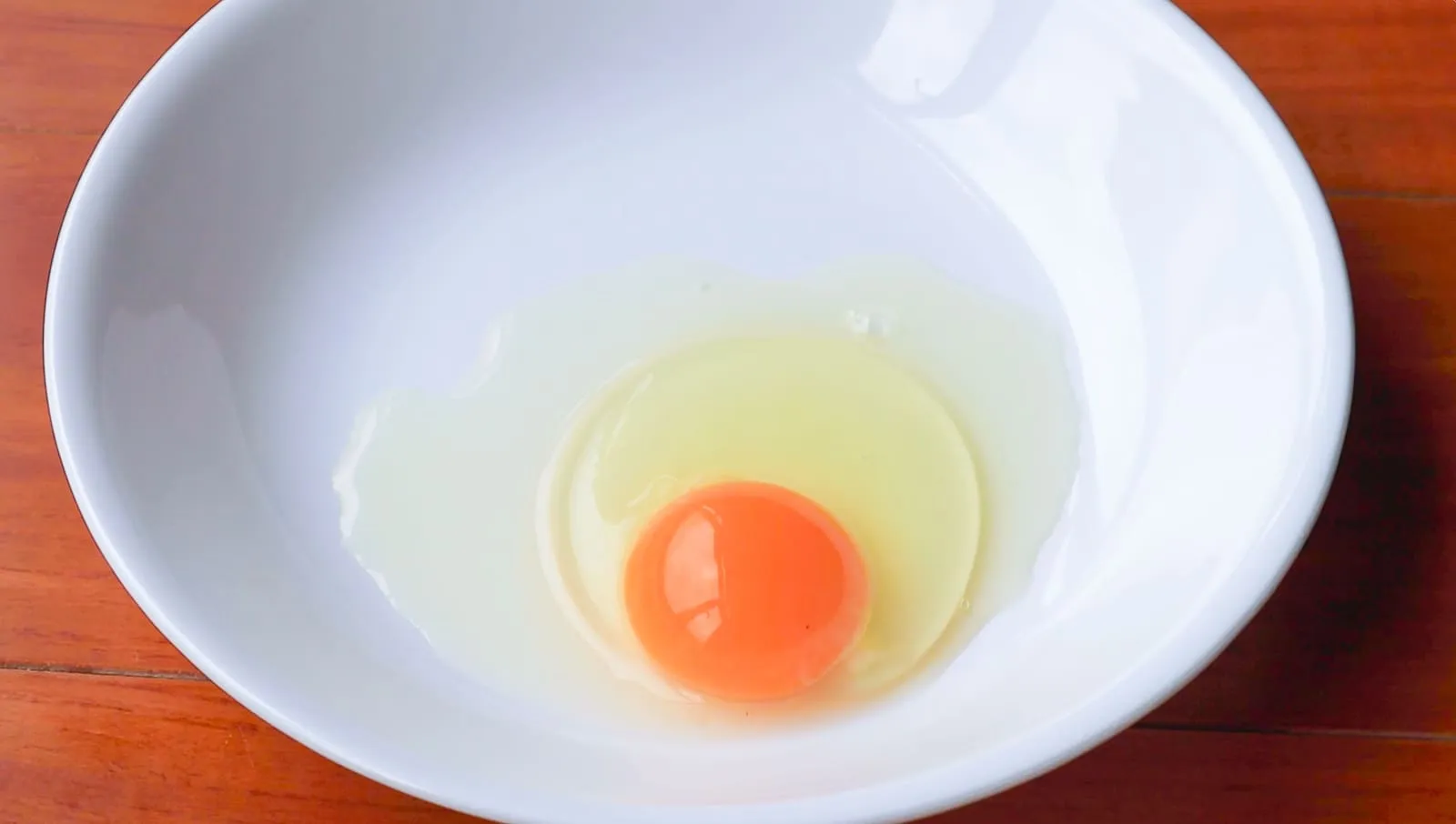
As with any egg dish or baking, the first and most important thing for a perfect poached egg is using fresh eggs. Besides tasting better, fresh eggs have a higher proportion of thick white, so they’re less likely to spread out when they go into the water! What do I mean? Take a look at the picture below. If you crack an egg onto a plate, you’ll see three rings: the yolk in the middle (obviously), then the round thick white, and on the outside a watery layer of thin white. Why choose fresh eggs? Because the fresher the egg, the less thin white it has, and the thin white is the main culprit behind egg drop soup.
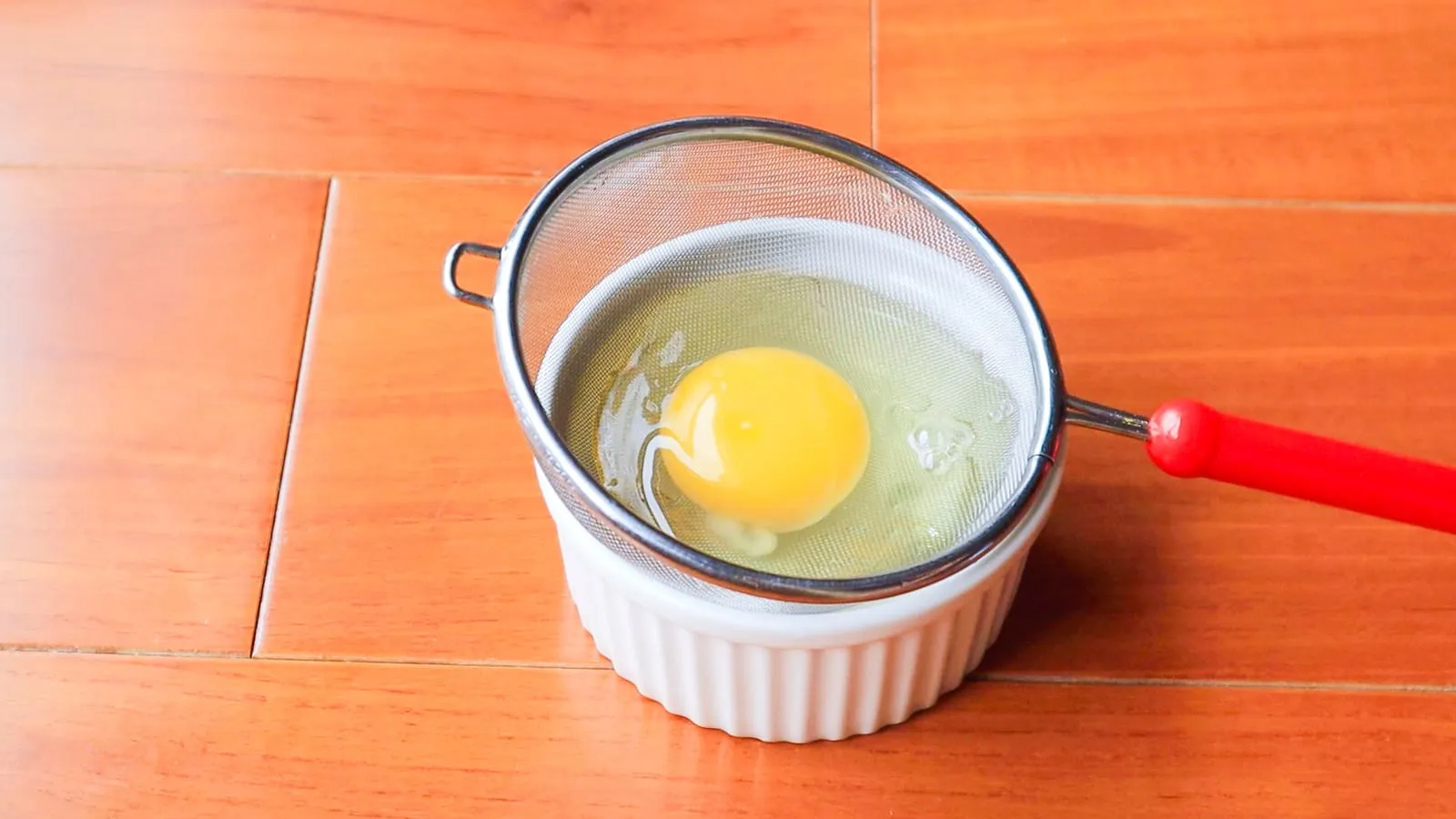
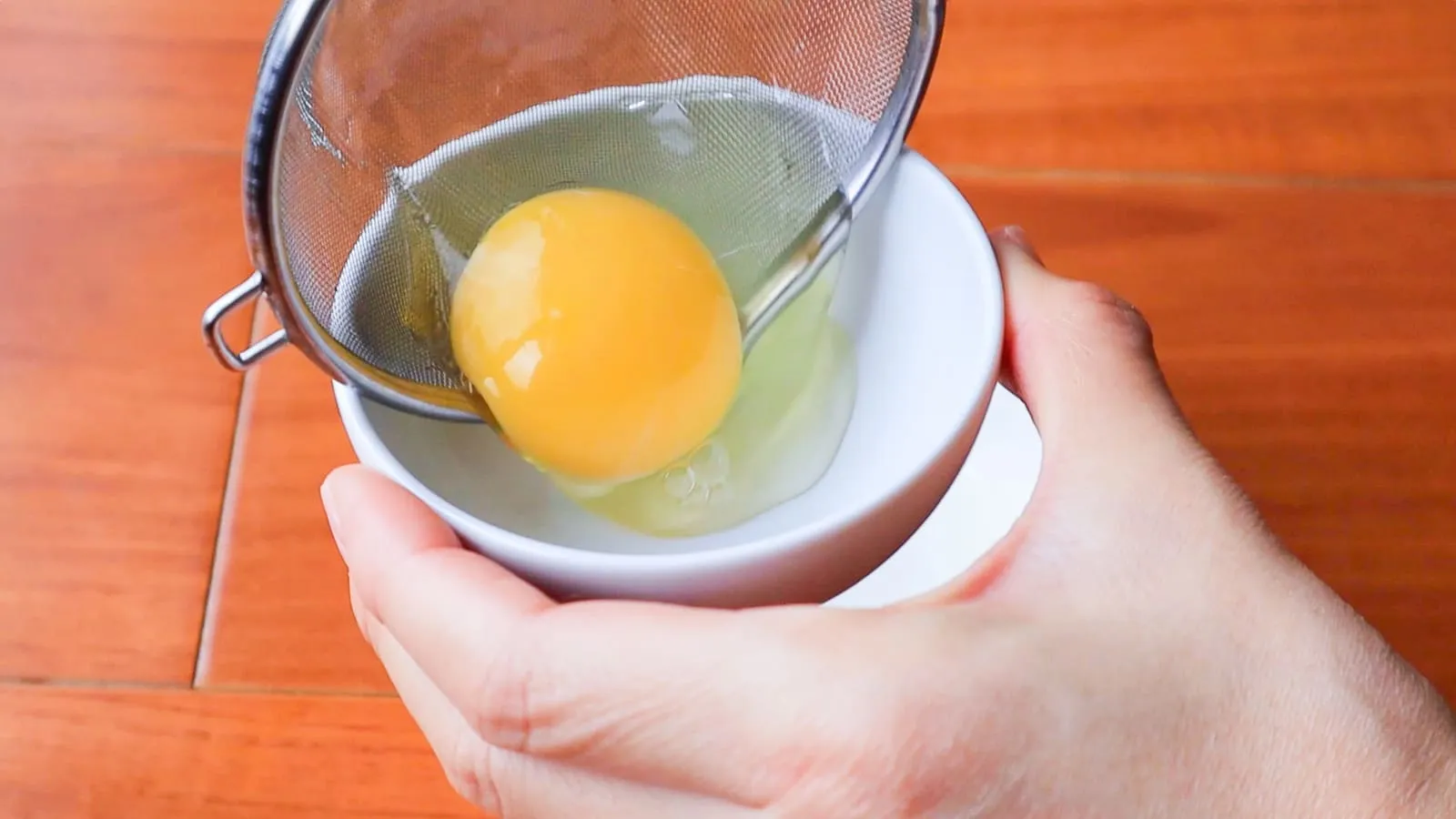
Strain off the thin white with a fine sieve, and put the egg in a small dish before it goes into the water
Even the freshest eggs still have some thin white, so before cooking, I crack the egg into a fine sieve and let the thin white drain away a little. That way it’s less likely to turn into egg drop soup while cooking. If you find this a hassle, you can skip it. Once in the water, the thin white will turn into wispy shreds and drift away, but the rest in the middle will still set into a round egg. It just won’t be as pretty.
Put the strained egg in a small dish, so it doesn’t scatter in the water when you slide it in. It holds its shape more easily than cracking an egg straight into the pan.
The pan matters: one that holds 5-7 cm of water is best
A lot of people recommend a saucepan, a very deep one. But in my experience, I’d recommend just using a deep skillet. In a very deep pot the egg may come out rounder, but it’s often hard to scoop out and drifts around out of control. Of course, with less than 5 cm of water, your egg will come out flat.
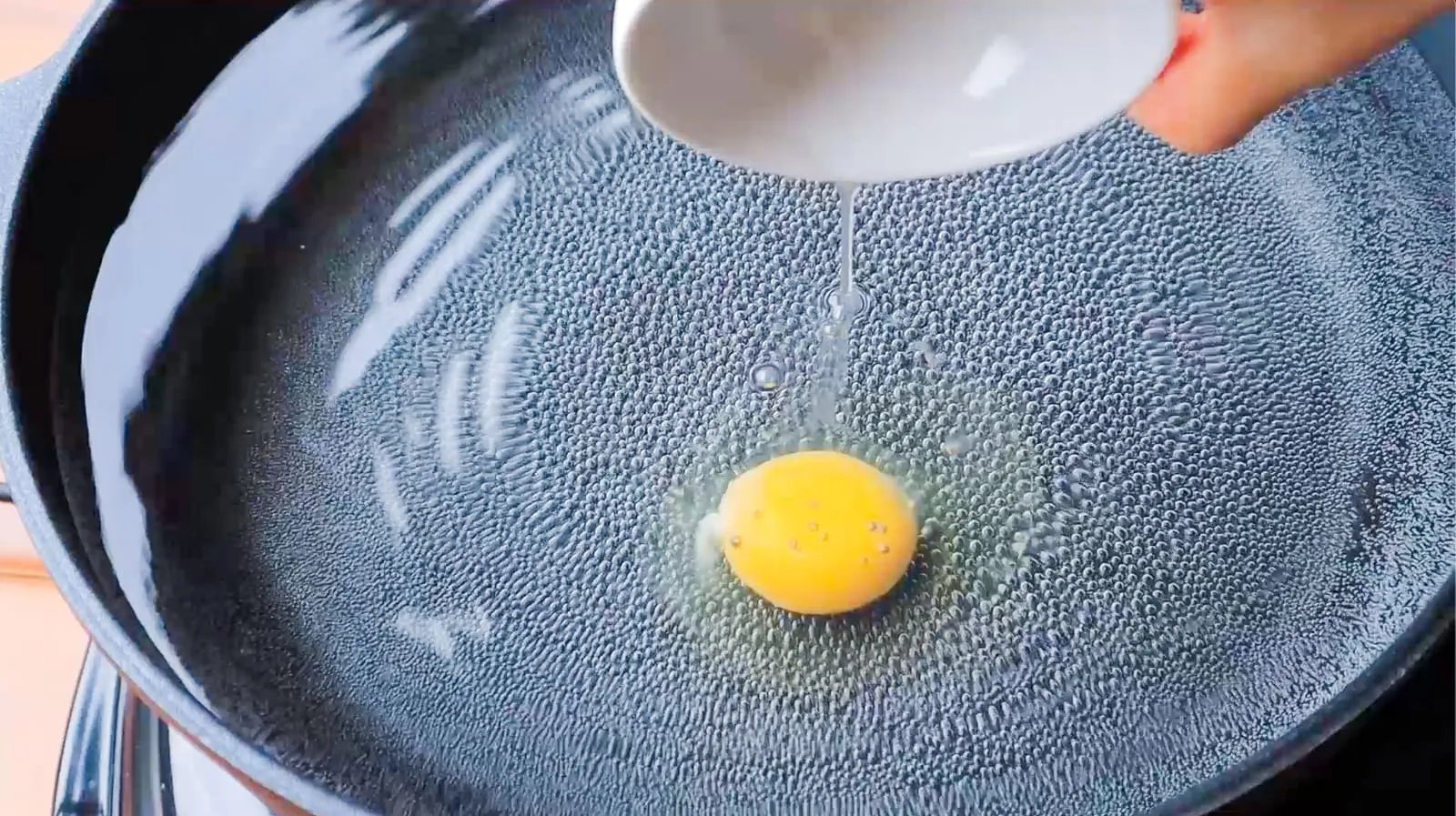
Don’t poach eggs over high heat!
Fill a deep pan with 5-7 cm of water, bring it to a boil over high heat, then turn it down to very low so it’s just bubbling like this. Never drop the egg into rapidly boiling water, that’s a sure path to egg drop soup. Once it’s gently bubbling, bring the small dish close to the surface of the water and gently pour the egg in.
That’s right, I don’t add vinegar to the water, and I don’t make a whirlpool with a spoon. I really don’t think you need to, but if you want to add a spoonful of vinegar to the water to help the white set faster, go ahead! Then just slide the egg in with confidence~ You can also gently use a spoon to slowly nudge the white around the edges toward the center.
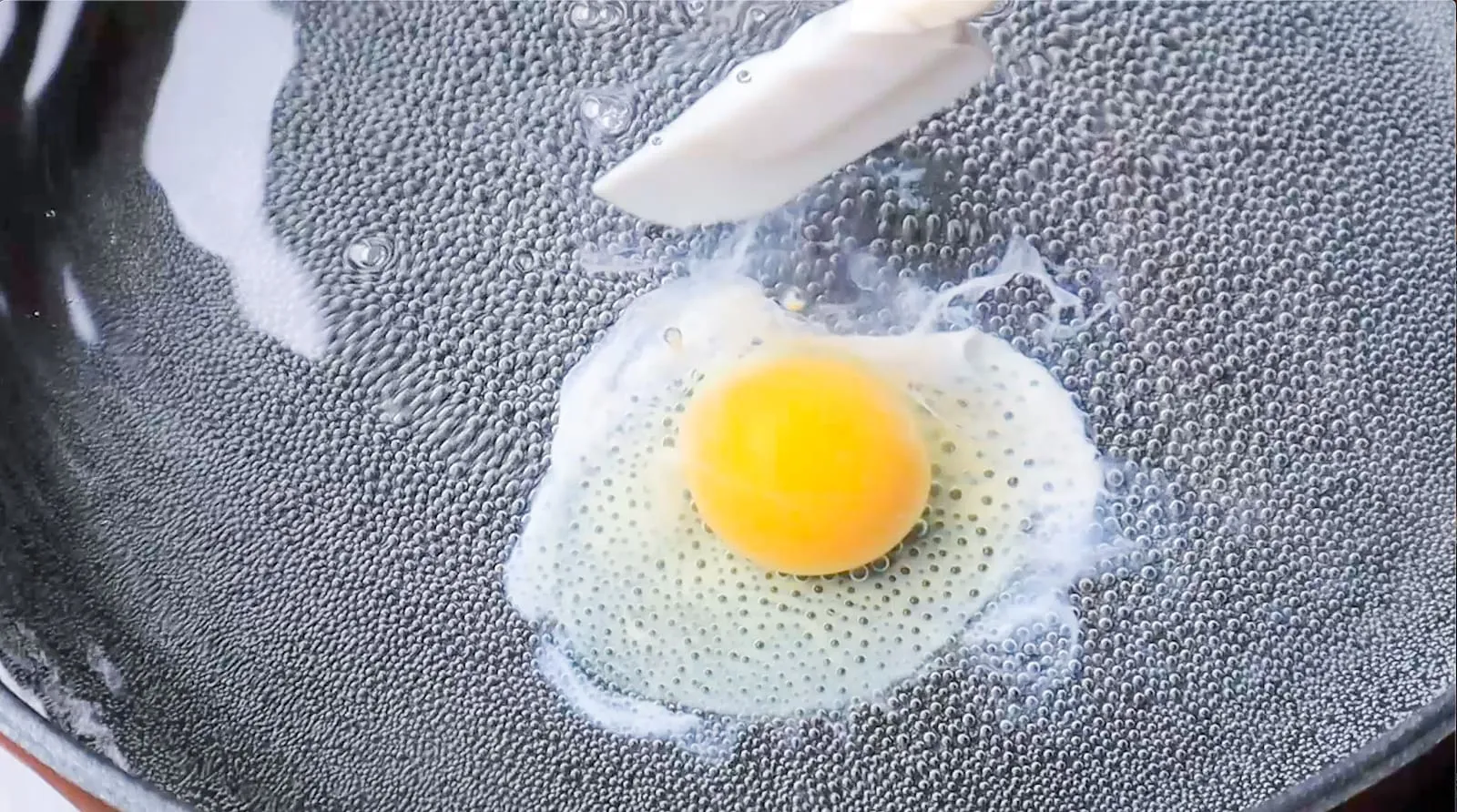
How do you like your eggs done?
Generally, 3-6 minutes gives you a yolk that still runs. After more than 5 minutes, the yolk gradually starts to set. Mr. Caesar likes his at 3 and a half minutes, while I prefer at least 4 minutes. The cooking time also depends on the water temperature, so if you lift the egg out and the white still seems very loose, you can put it back and cook it for another 30 seconds to 1 minute
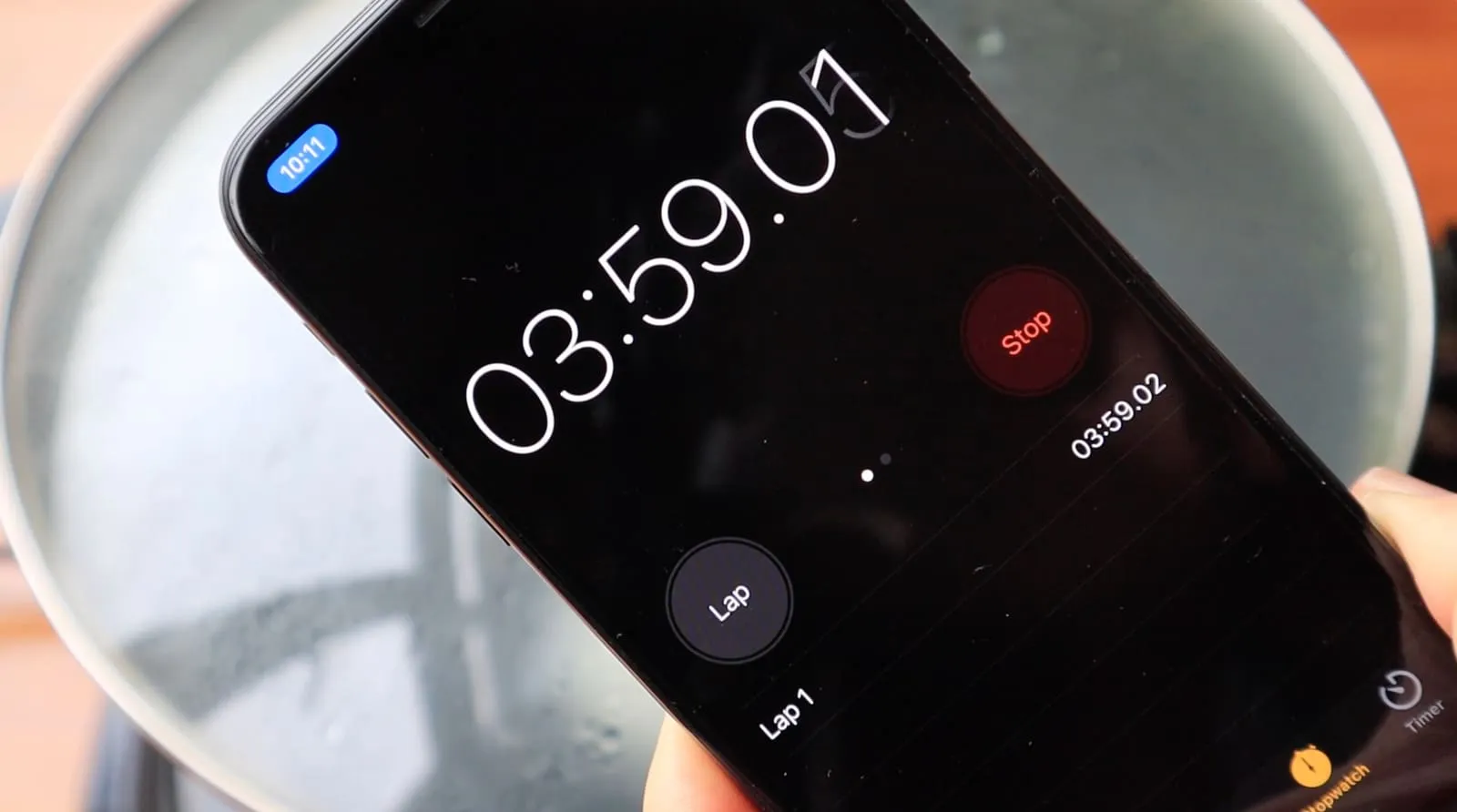
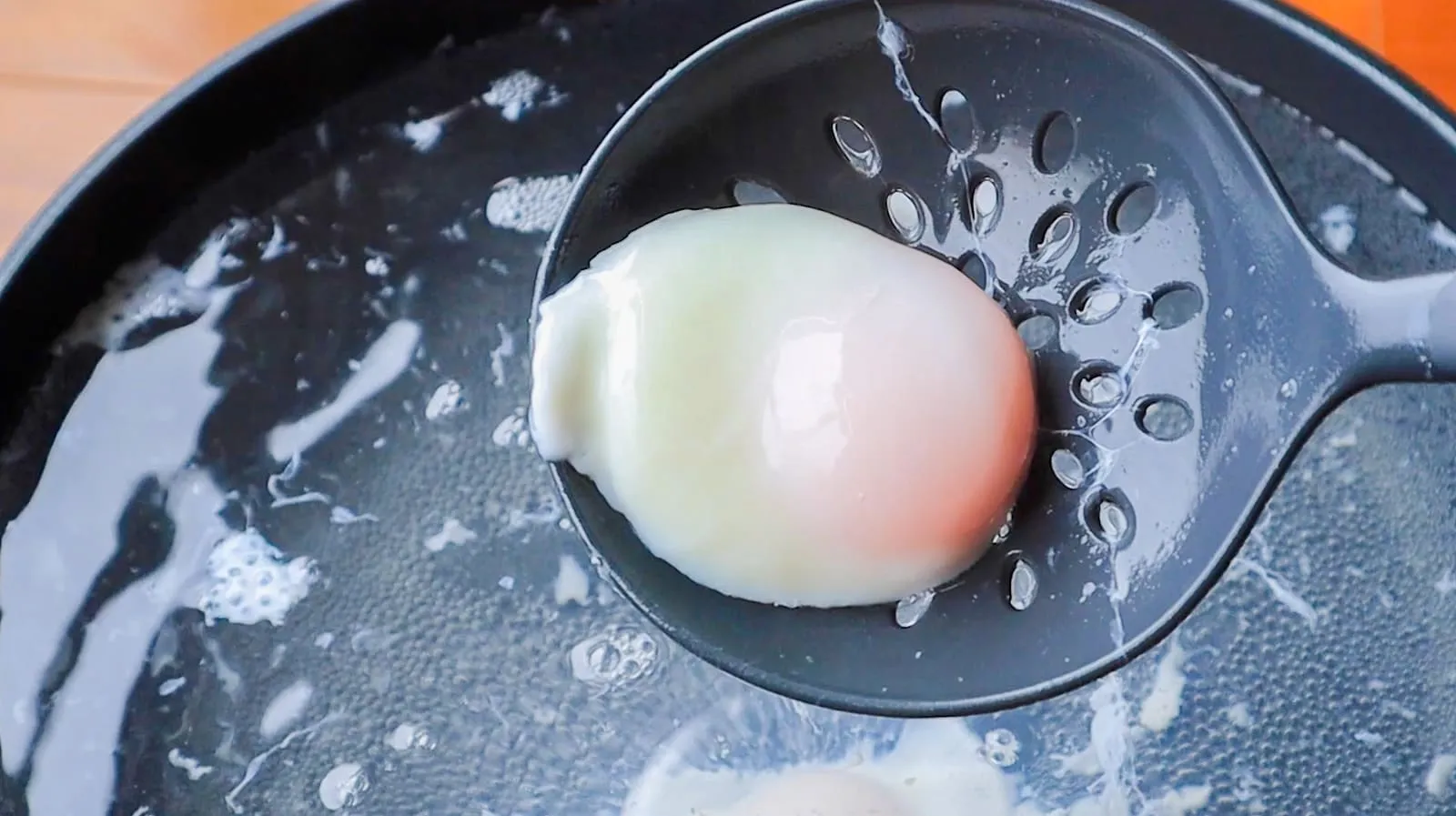
When the time is up, gently lift the egg out with a slotted spoon.
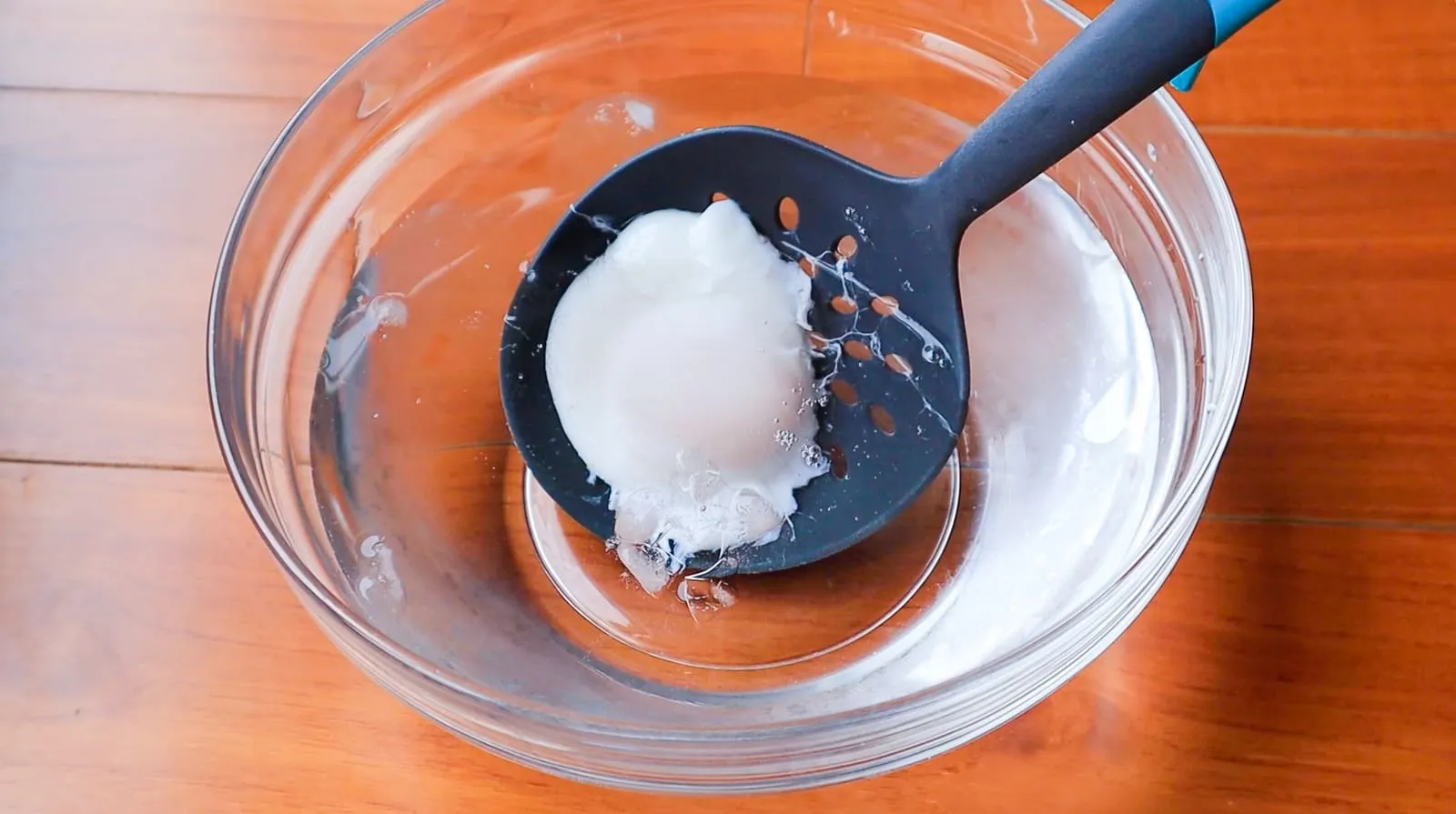
Put the poached egg in ice water to keep it from cooking further
If you’re not eating the poached egg right away, put it in ice water while you prepare the rest of your meal. This keeps the residual heat from continuing to cook the yolk. Otherwise, by the time you’ve finished making everything else, the yolk might not be runny anymore.
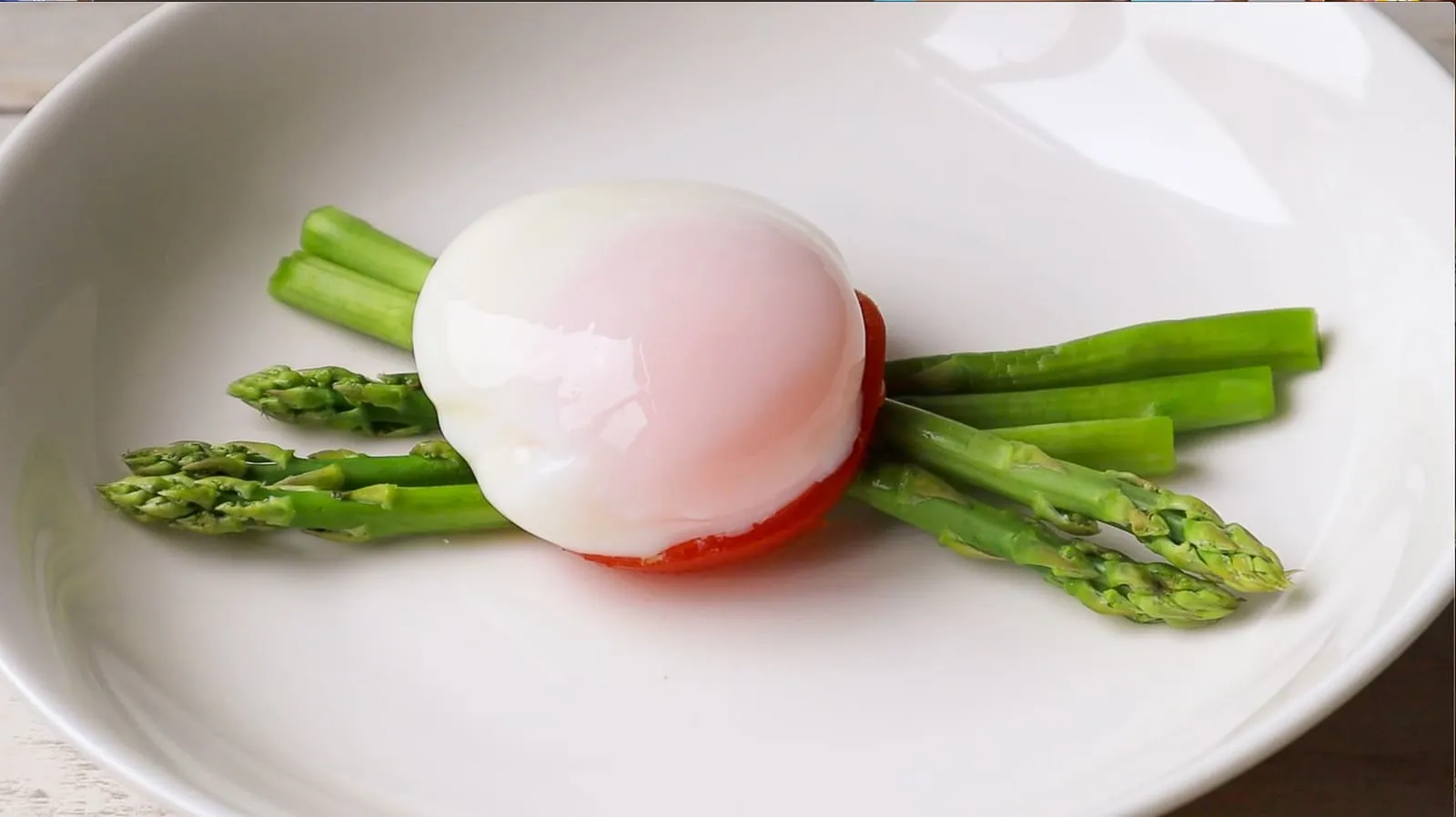
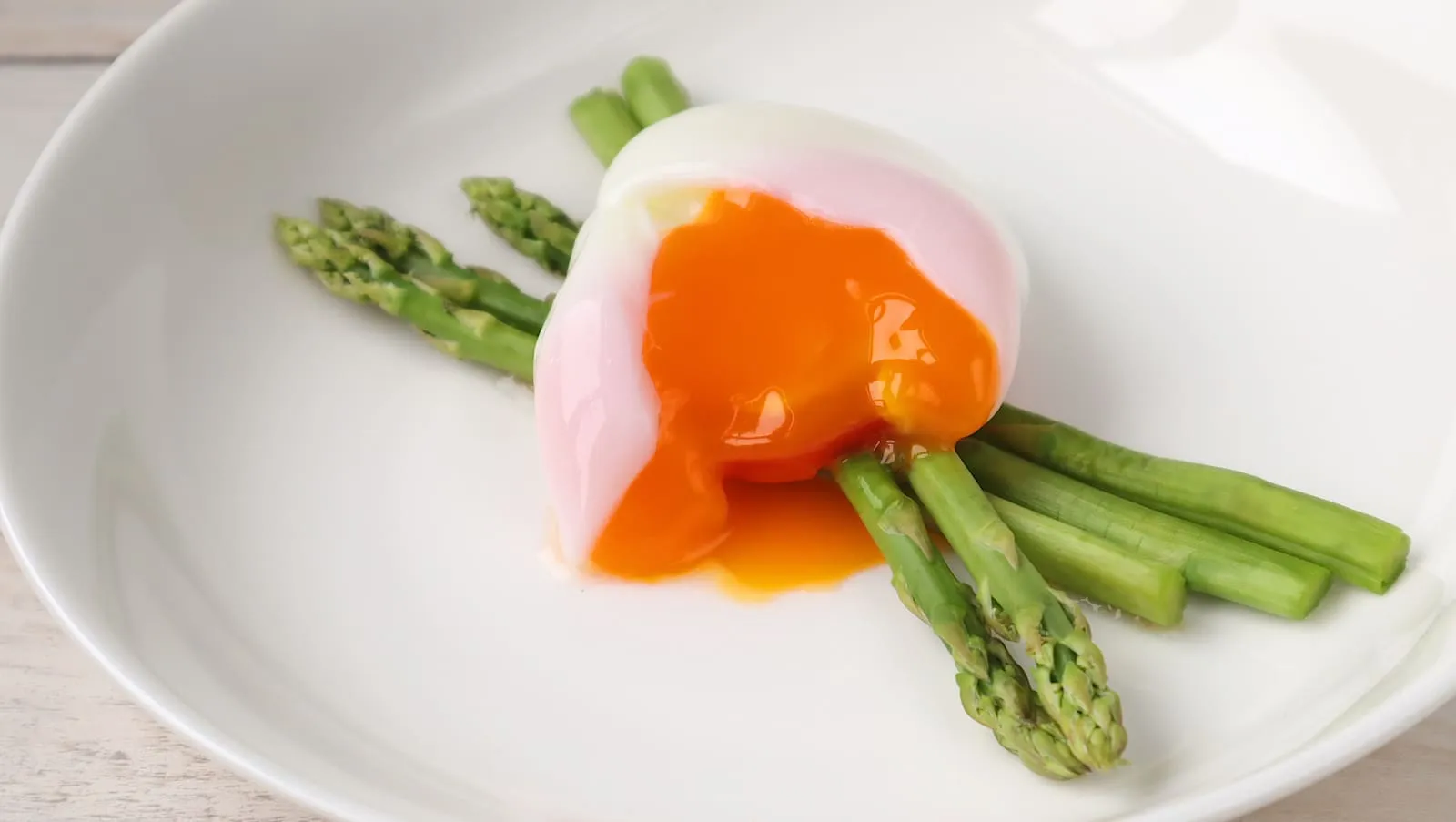
↑↑ Look at this smooth, tender poached egg, isn’t it so satisfying~ ↑↑ Silky, soft white with the yolk just peeking through. This is when I especially want to cut into it.
It’s such an exciting moment. When I cut in and see the yolk run out, my mouth starts watering too!
Easiest Perfect Poached Egg
- Servings
- 0
Ingredients
Instructions
-
Use fresh eggs. Crack each egg into a sieve to drain off the thin, watery white, then put the egg in a small bowl or dish.
-
Get a deep skillet* (or small saucepan) and fill it with 5-7 cm of water. Bring to a boil over high heat, then turn the heat down until the water is just barely bubbling.
-
Gently slide the egg into the pan and set a 4-minute timer on your phone. While it cooks, you can use a spoon to gently nudge the water toward the center to gather the white together.
-
When the 4 minutes are up, gently lift the poached egg out with a slotted spoon. Take a quick look at it; if it still seems too raw, cook it for another 30 seconds to 1 minute.
-
If you're not eating it right away, put the poached egg in ice water to keep the yolk from cooking further.
-
Enjoy your smooth, tender poached egg!
Notes
✎ Key notes for perfect poached eggs
- The fresher the egg, the better: fresh eggs have a higher proportion of thick white, so they're less likely to spread out when they go into the water.
- Strain off the thin white: crack the egg into a sieve and let the thin white drain away.
- Use a small dish (bowl) for the egg: put the strained egg in a small dish.
- A pan that holds 5-7 cm of water is ideal: in a very deep pot the egg may come out rounder, but it's often hard to scoop out and drifts around out of control. Of course, with less than 5 cm of water, your egg will come out flat.
- Don't cook the egg in rapidly boiling water: bring the water to a boil over high heat first, then turn it down to very low so it's just bubbling. That makes it least likely to turn into egg drop soup.
- Time it well: I suggest starting with 4 minutes as a baseline, and adding 30 seconds if you like it more done.
- Ice water stops the egg from cooking: put the poached egg in ice water, then go prepare the rest of your meal without worrying. That way the yolk stays in its mouthwatering runny state.